Case Study: Renovation vs. New Worship Facility
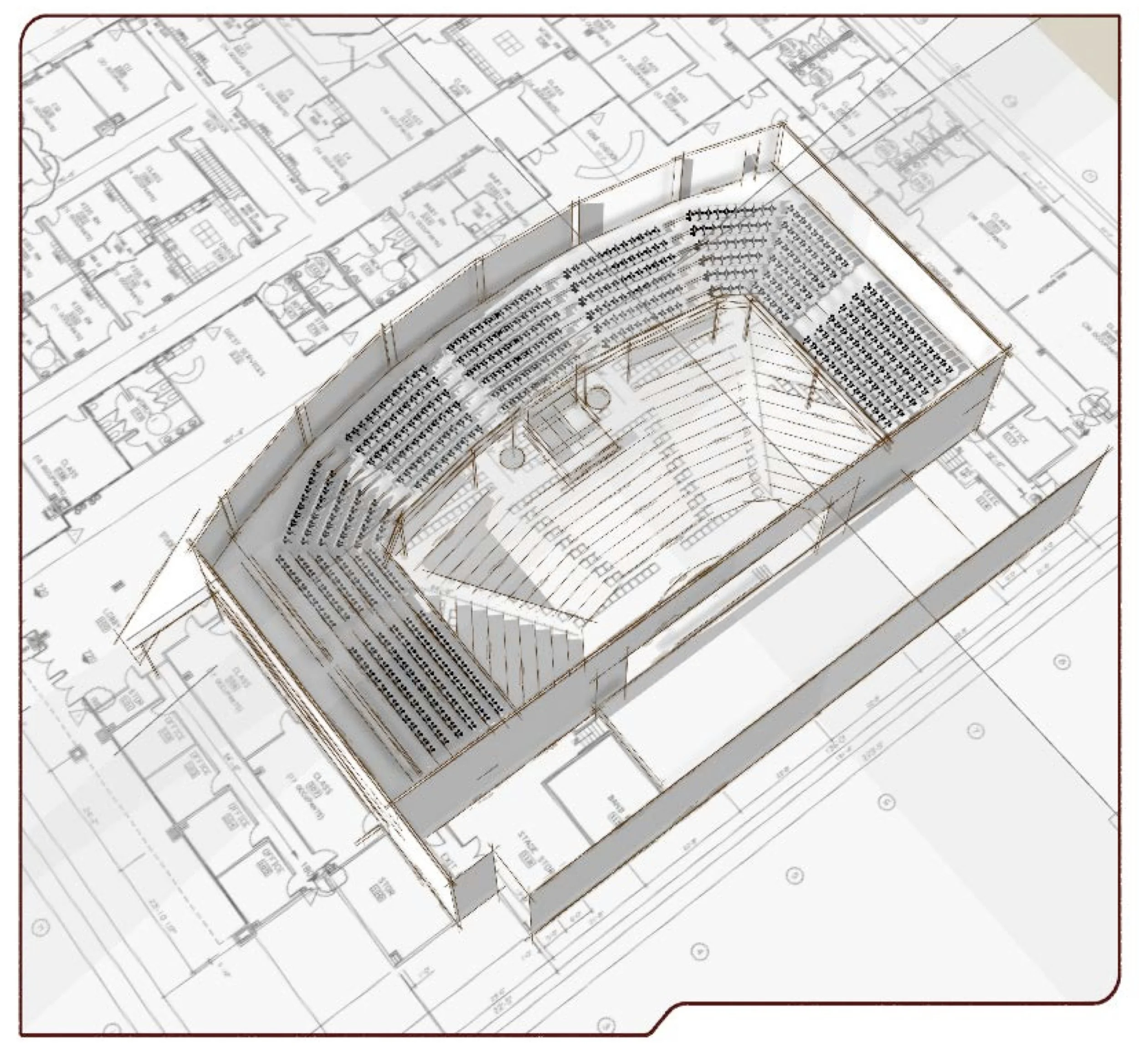
A growing church’s multi-use room was increasingly limiting—constraining recreation and outreach events while also falling short as a worship environment due to geometry, sightlines, and AVL placement. Leadership hired Facet to quantify one path: build a separate recreation facility and renovate the existing room to add worship seating with the required MEP, life-safety, and AVL upgrades. As the renovation scenarios were analyzed, Facet introduced a stand-alone worship alternative solely for comparison, providing leadership with a decision-ready comparison of costs, trade-offs, and ministry-based ROI.
The CONTEXT - Decision
The church was at a point where space constraints were no longer an inconvenience—they were shaping ministry outcomes. The existing multipurpose environment was asked to perform two different jobs: support high-impact weekend worship and host weekday recreation and community activities. Over time, the compromises became more visible: worship needed better geometry and integrated AVL, while recreation and event use needed a room that could flex without constantly reworking setups. Leadership sought a facility plan that would improve ministry capacity without compromising long-term financial resilience.
The Underlying tension
The leadership’s question was not whether recreation ministry matters—it does. The real tension was stewardship and sequencing: which investments strengthen the ministry’s mission while protecting future budgets?
Two paths were viable, but they behave differently over time:
Recreation and events can produce helpful, transactional income.
Worship participation tends to drive recurring engagement and giving.
The church needed clarity on which investment would most responsibly support long-term ministry growth.
What Facet Was Hired To Answer
The original assignment was to evaluate Path A only:
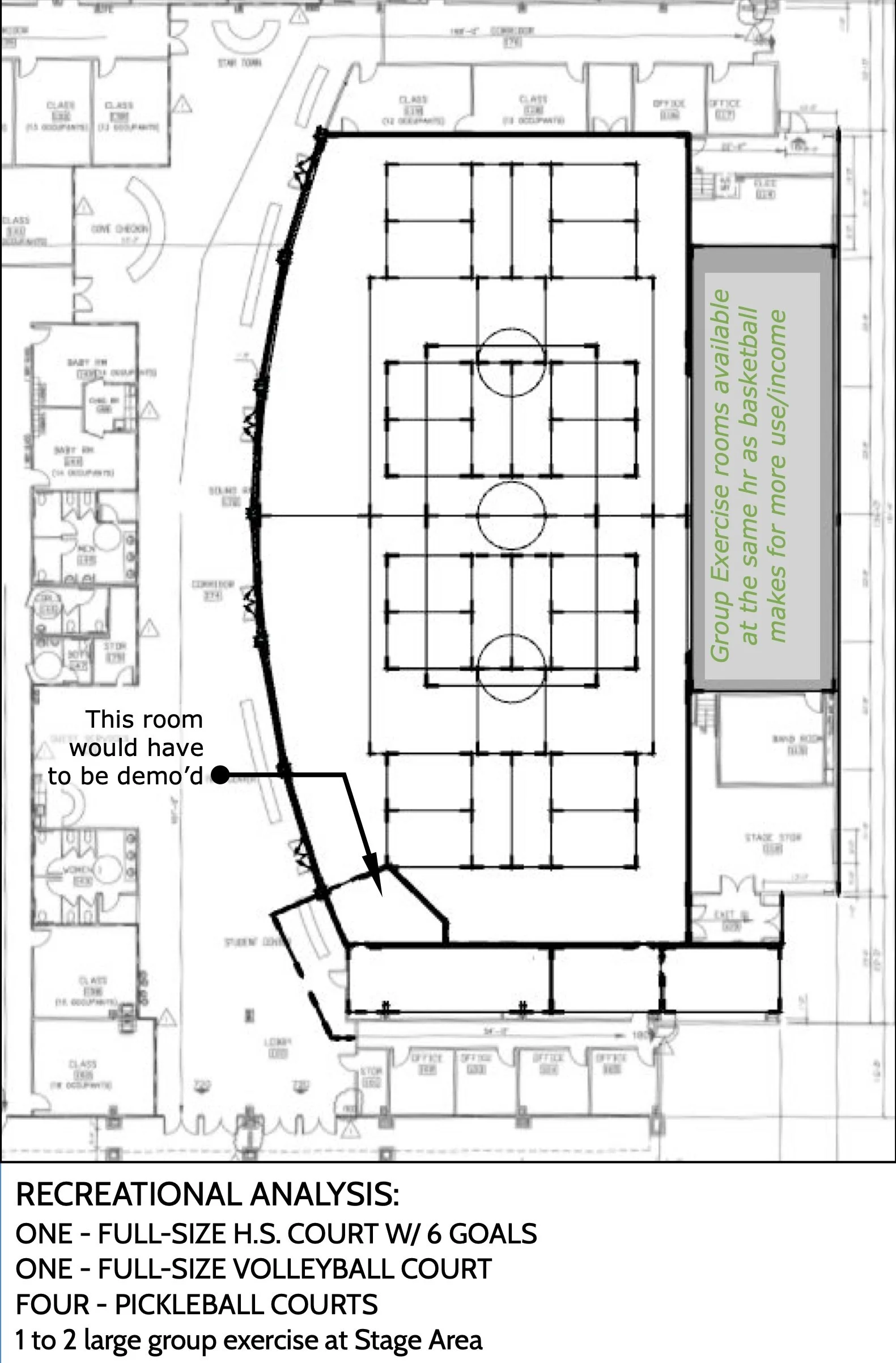
Path A: Build a separate recreation building on campus and renovate the existing multipurpose room to increase worship seating.
Facet’s role was to quantify what that renovated worship outcome could realistically deliver—seat gains and the required upgrades that come with increased occupancy and elevated seating.
The Contrast OPtion Introduced for Clarity
As Path A was quantified, a second question naturally emerged: how does the combined investment of “recreation + renovated worship compromise” compare with a stand-alone worship facility designed specifically for worship geometry and integrated AVL?
Facet introduced Path B strictly as a contrast option—so leadership could evaluate both directions with clearer ROI logic and better decision support.
Path B: Build a stand-alone worship building customized for worship geometry, sightlines, and integrated AVL.
Path A: Renovation Prototypes Studied (Net Seat Gain)
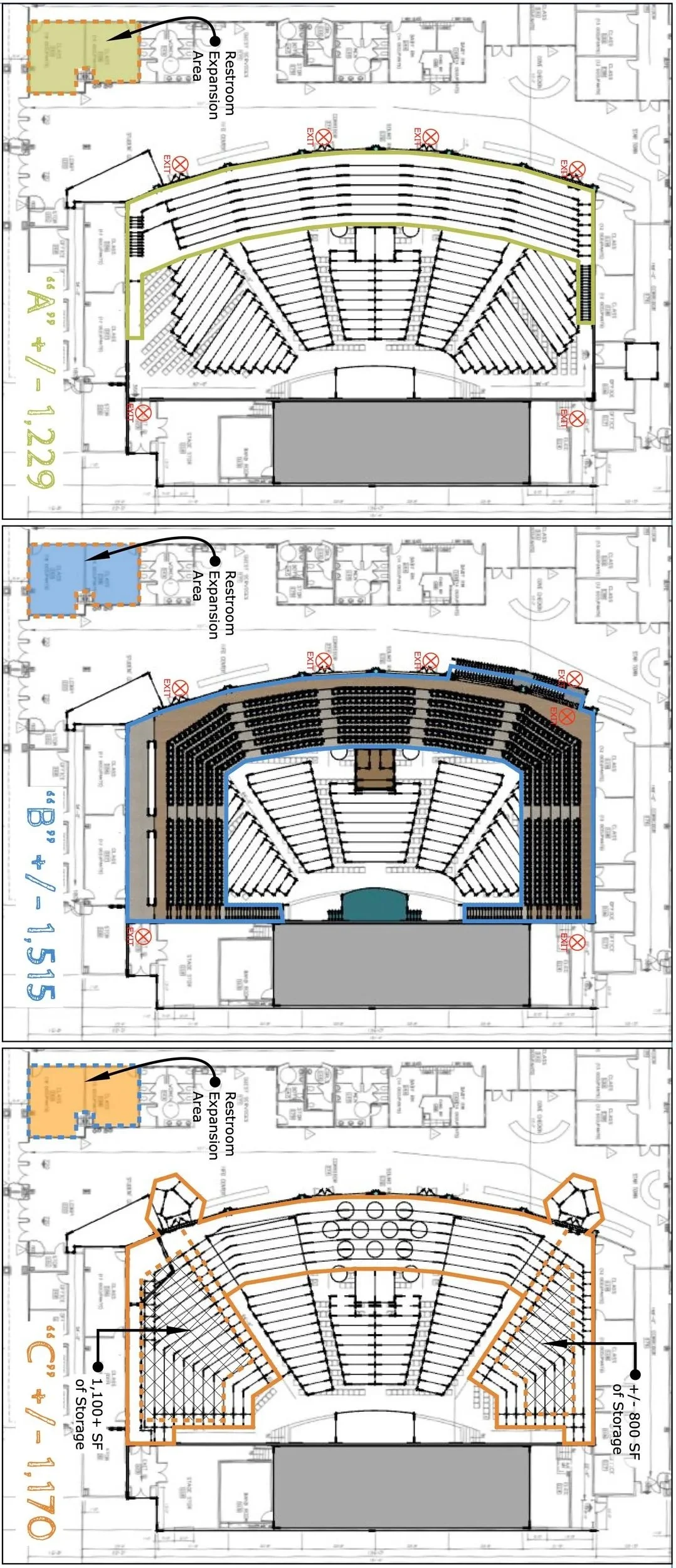
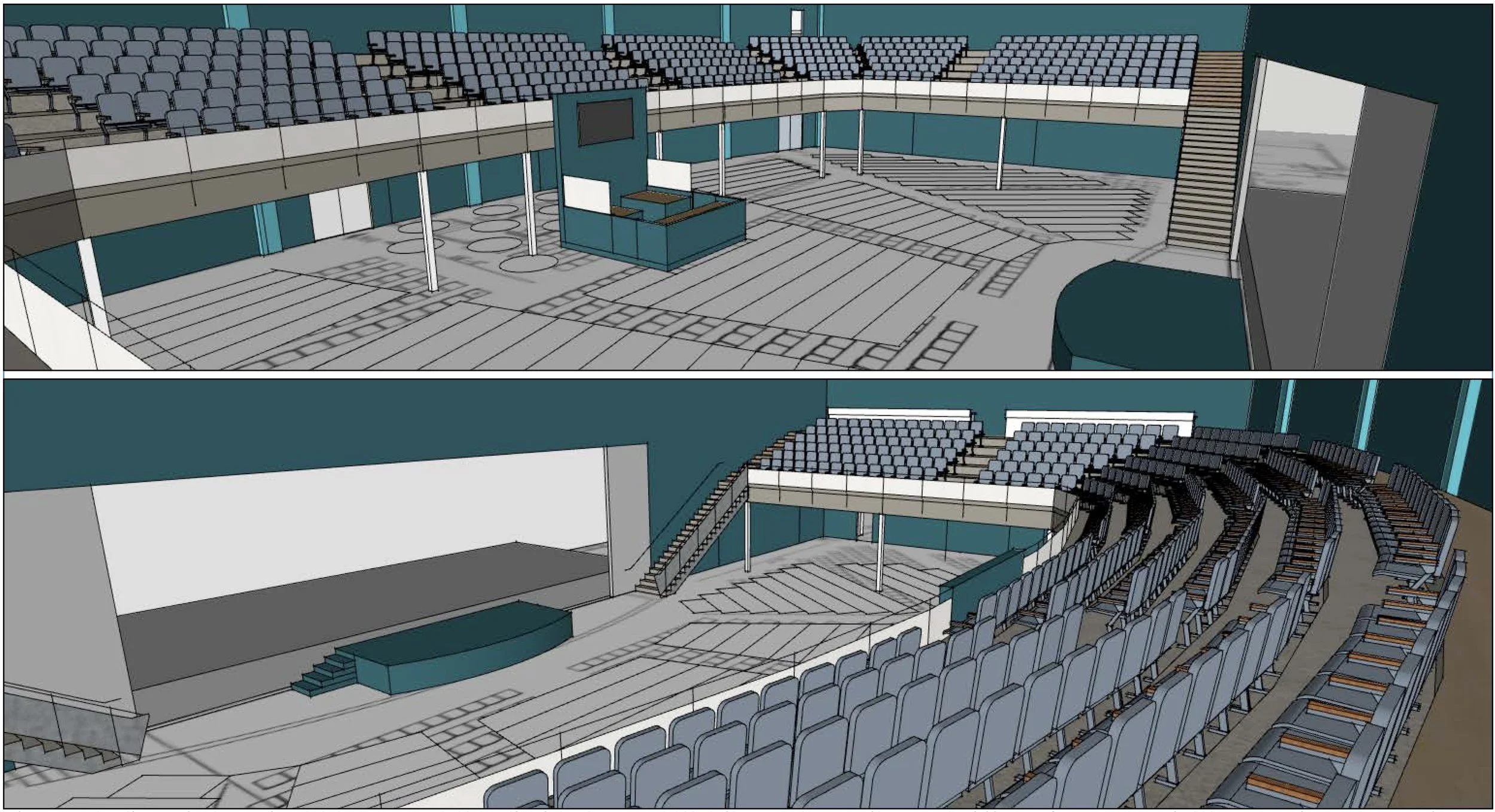
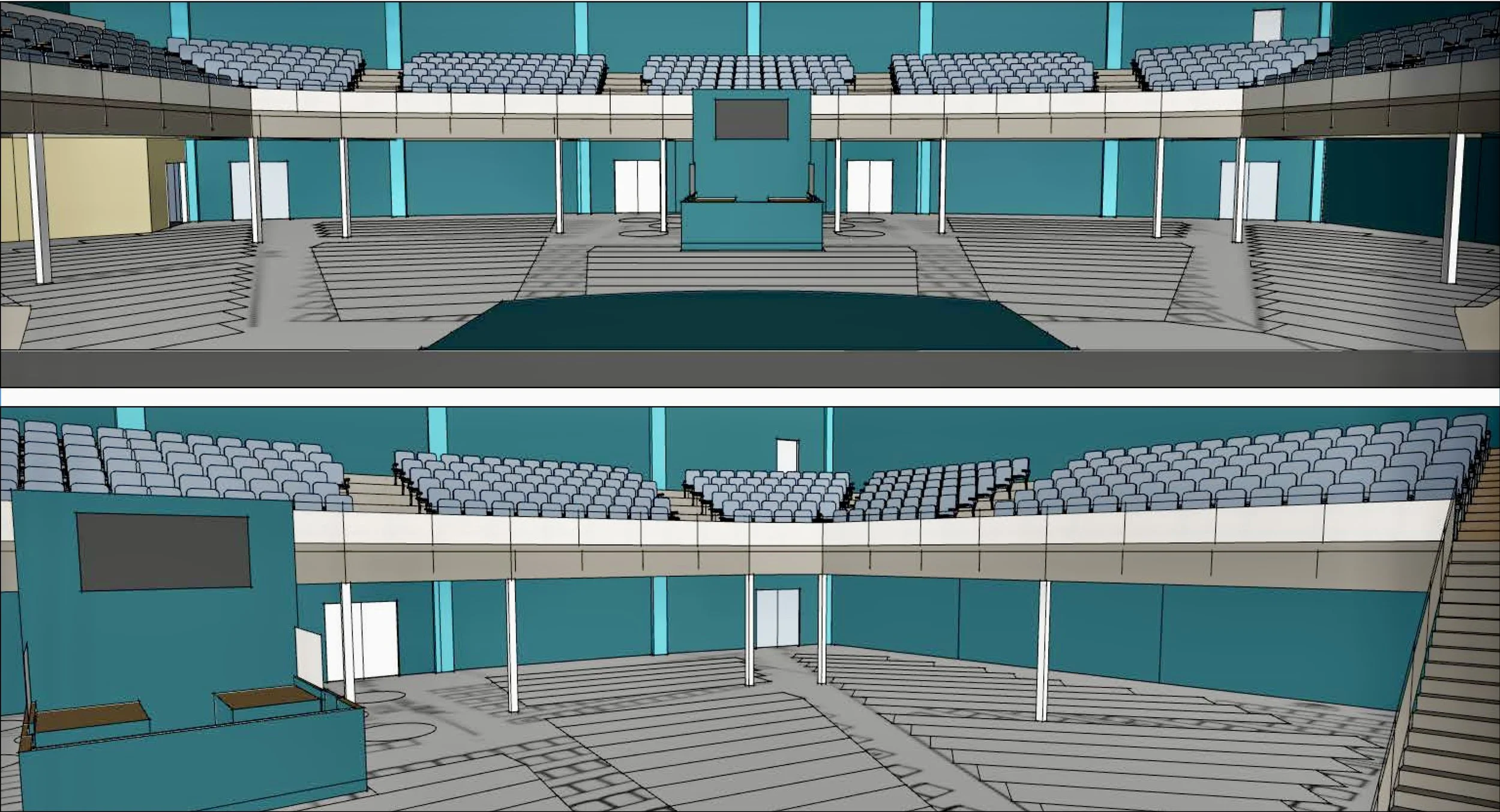
Rather than focusing only on “total capacity,” the study measured what each renovation concept would add beyond a baseline main-floor worship setup of approximately 800 chairs in the existing room configuration. City Ch - Mezz Addition Study 0…
Option A — Mezzanine Concept
Net gain: approximately +429 seats (from ~800 baseline to ~1,229 total).
This gain comes primarily from new mezzanine seating and added seating areas behind AVL. City Ch - Mezz Addition Study 0…Option B — U-Shaped Mezzanine Concept
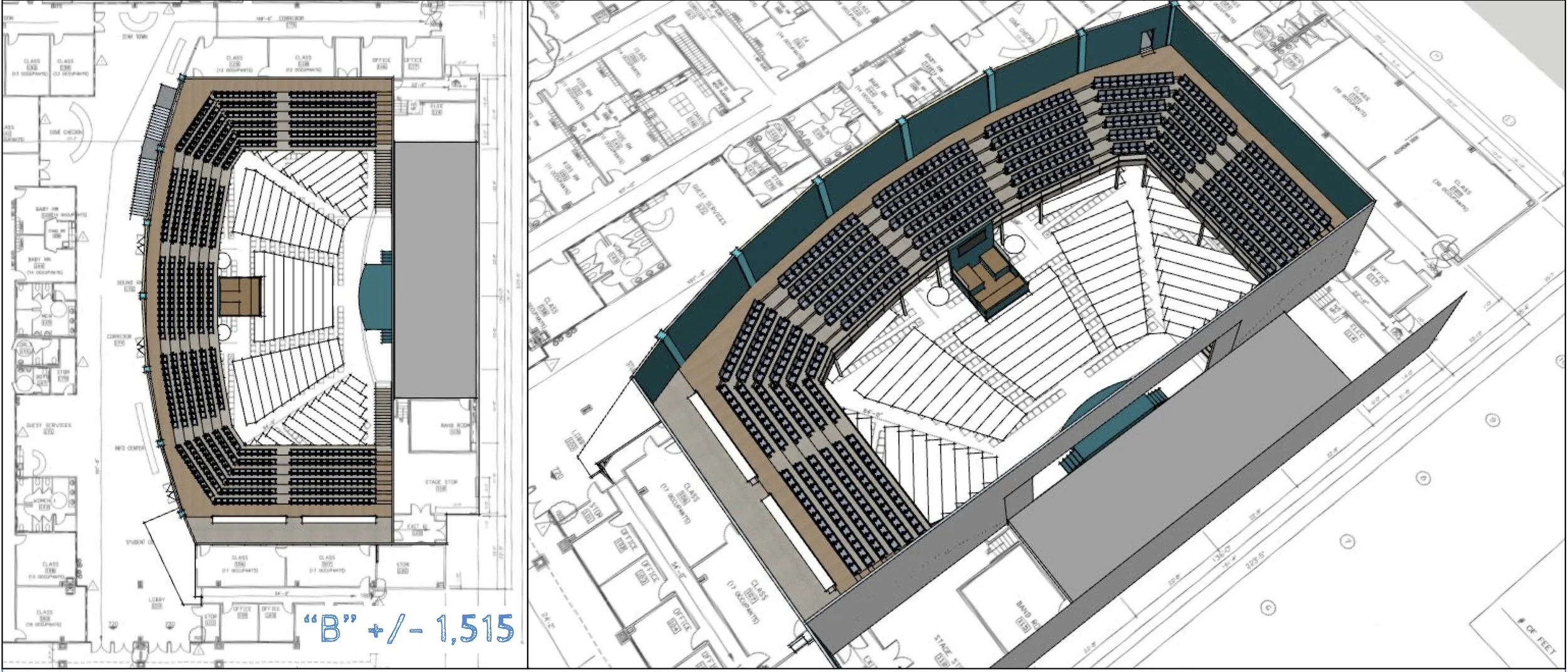
Net gain: approximately +715 seats (from ~800 baseline to ~1,515 total).
This concept maximizes added seats by wrapping the room on three sides, adding a larger balcony/mezzanine seating count, plus additional seating zones. City Ch - Mezz Addition Study 0…Option C — Stadium Riser / Hybrid Concept
Net gain: approximately +370 seats (from ~800 baseline to ~1,170 total).
This option shifts the seating mix: it reduces main-floor chairs to accommodate the riser geometry, while adding significant upper-level seating and supplemental seating zones. City Ch - Mezz Addition Study 0…
Path B: Stand-alone Worship Building (Purpose-built R.O.I. Option)
Path B was introduced as a contrast option to help leadership evaluate whether a purpose-built worship facility—designed from the outset for worship geometry—would produce a stronger ministry-based return than combining a recreation building with an adapted worship renovation.
Rather than “net seats added inside a constrained room,” Path B reframes the gain as purpose-built capacity and experience:
Program outcome: a dedicated worship environment with optimized room geometry, clear sightlines, stronger congregation-to-stage connection, and AVL integration (screens, speakers, lighting, booth) planned as a system—not retrofitted.
Ministry ROI intent: increase the clarity and perceived value of the primary weekly gathering, supporting recurring engagement and giving that typically sustain long-term financial health.
Stewardship logic: a higher upfront capital investment can be justified when it delivers a clearly improved worship outcome that is easier to communicate, fund, and rally around—rather than a costly renovation that still feels like compromise.
In short, Path B was not positioned as “better by default.” It was included to answer a practical leadership question:
If the church is going to invest significant capital, which path produces the clearest, most durable worship outcome—and the most defensible ministry-based ROI?
Your congregation is trusting your leadership to make a wise decision. The most responsible thing you can do before any building commitment is to understand what you're actually committing to. Start with a conversation — no pressure, no pitch, just clarity.
The Hidden Variables That Drive Scope and Cost
A seat increase is rarely just a seat increase. Each scenario required leadership to understand building-wide triggers tied to occupancy and geometry changes, including: City Ch - Mezz Addition Study 0…
Life safety and egress (exits/stairs and egress width implications for upper levels) City Ch - Mezz Addition Study 0…
Plumbing fixture counts (restroom additions tied to higher occupant load) City Ch - Mezz Addition Study 0…
Fire protection (sprinkler system expansion) City Ch - Mezz Addition Study 0…
Mechanical capacity (added rooftop equipment/tonnage and ductwork rework) City Ch - Mezz Addition Study 0…
Electrical distribution and load (reorganization and possible service implications) City Ch - Mezz Addition Study 0…
AVL redesign (screens, speakers, lighting, and booth changes to match the new geometry) City Ch - Mezz Addition Study 0…
This is where the process created immediate value: it replaced “best guess” planning with realistic triggers and associated scope categories.
Ministry-Based ROI Lens
The analysis distinguished two different types of “return”:
Transactional use (rentals, leagues, one-off events) can contribute to budget diversification, but demand and utilization vary over time.
Recurring participation (consistent worship attendance and engagement) is often more directly tied to predictable giving and long-term sustainability.
This lens did not diminish recreation ministry; it clarified how different facility types typically behave financially—and why sequencing matters when debt service and operating costs are part of the equation.